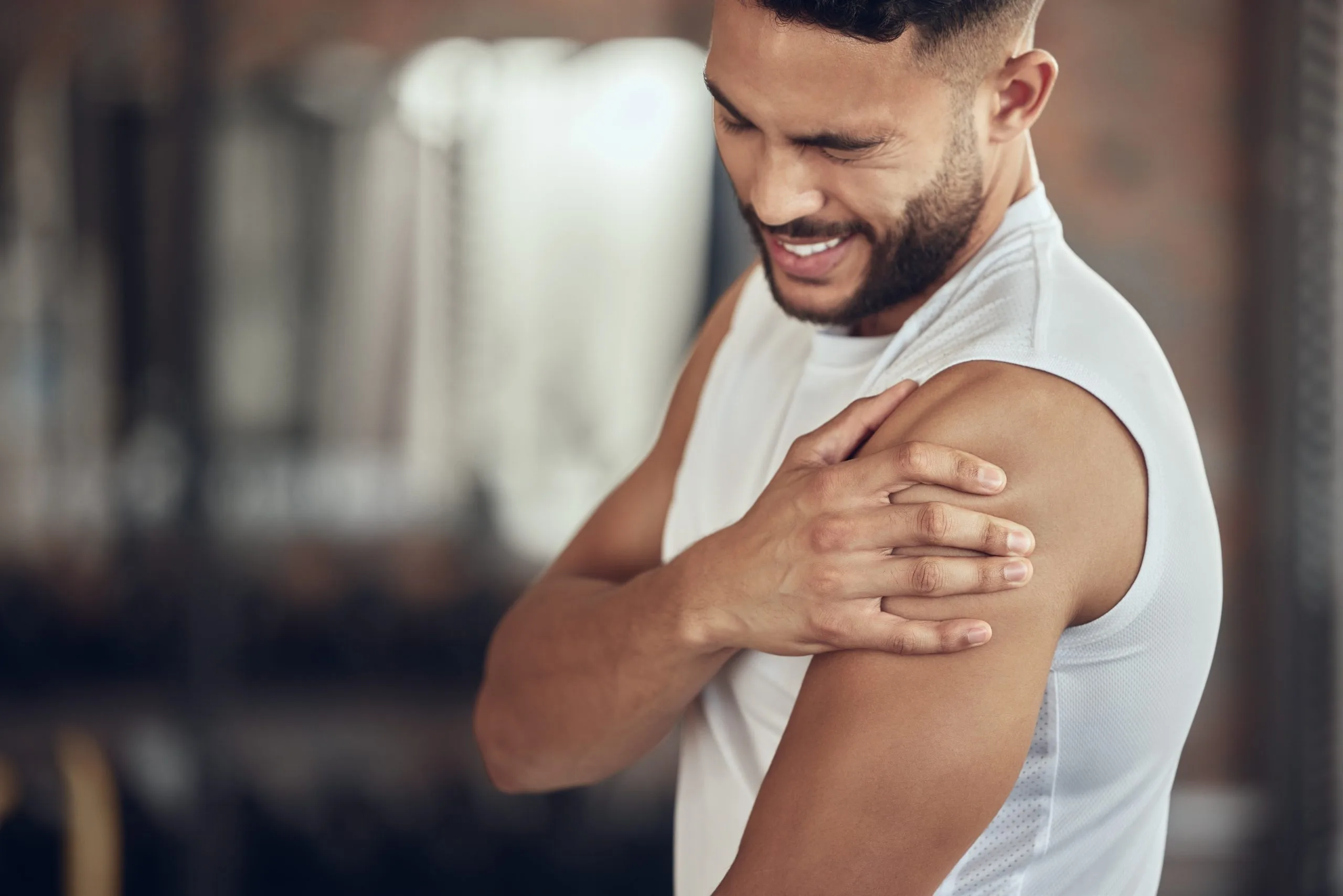
Yes – many rotator cuff tears can improve without surgery, especially partial tears and some full-thickness tears in people who do not need high-level overhead strength. A full-thickness tear rarely reattaches to bone on its own. However, pain, motion, and daily function can still get much better with rest, physical therapy, and advanced regenerative treatments. “Healing” depends on tear type and size, your age, activity level, how the tear happened, and what you need your shoulder to do. It can mean structural repair, functional recovery, or both.
A rotator cuff tear is damage to the tendons that connect your shoulder muscles to the head of the upper arm bone (humerus). Tears can start from a fall, a sudden pull, lifting something too heavy, or years of repetitive stress and aging (a degenerative tear).
The four tendons are the supraspinatus, infraspinatus, teres minor, and subscapularis
The supraspinatus is torn most often and has a limited blood supply, which is one reason recovery can be slow
The tendon can fray like a rope and eventually tear
“Healing” can mean two different things, and mixing them up causes a lot of confusion.
Structural healing: Torn tendon fibers physically reattach to bone. On MRI or ultrasound, the gap would appear closed or significantly smaller
Functional healing: Pain drops, strength returns, and you can sleep, dress, drive, work, and do daily activities again – even if a scan still shows a tear
For many patients, functional healing is the primary goal. You can have a tear that still shows on imaging and still live with a strong, usable shoulder. You can also have a small tear that keeps hurting if the surrounding muscles stay weak or you keep repeating the same stressful motions.
The body has a remarkable ability to repair itself, but rotator cuff tendons present a unique challenge. A small partial tear might heal with rest and activity modification, but larger tears often struggle without intervention.
Rotator cuff tendons do not heal like skin. Blood flow in the tendon is limited, especially in the “critical zone” of the supraspinatus.
Tendons have very few blood vessels compared with muscle, so fewer oxygen, nutrients, and growth factors reach the injury
Age matters: tendon quality often declines, and degenerative tears in people over 60 may have frayed, thinned tissue that does not knit together easily
Smoking, diabetes, and poor sleep can slow tissue repair
The shoulder is a high-motion joint – every reach, lift, and roll in bed can tug on the torn edges and keep them from knitting back together
The rotator cuff does its job only when the tendon is anchored to the humerus. That connection is what lets muscle force move the arm.
In a full-thickness tear, a gap forms between the tendon and its attachment point; the body is not very good at bridging that gap on its own
If the tendon stays detached, the muscle can weaken, shrink, and collect fat (fatty atrophy)
Once that happens, even a later surgical repair can be harder, and strength may not fully return
Surgery physically anchors the tendon back to the bone with sutures; regenerative medicine offers a non-surgical way to encourage this process
No.
Many partial tears, small full-thickness tears, and chronic degenerative tears are treated first without an operation
People with decent motion, manageable pain, and no major weakness often start with therapy
Surgery is more often discussed when the tear is large, the injury is sudden in a younger or very active person, or therapy has not restored function
The decision is highly individualized and should be made after a thorough evaluation
A pain management specialist can help identify pain sources and recovery options when shoulder pain is limiting sleep or work.
At Advanced Aesthetics, our approach is to leverage the body’s own healing mechanisms with sophisticated, minimally invasive methods that go beyond a traditional “wait and see” plan.
A comprehensive plan is tailored to your injury, symptoms, and goals – and it is more than “just rest.”
Short-term activity modification so the tendon is not loaded all day (including avoiding painful overhead lifting)
Ice or heat, based on what eases your pain
Anti-inflammatory strategies guided by your clinician, including medication in some cases
A structured physical therapy program to strengthen supporting muscles and improve the range of motion
Sleep-position changes, such as supporting the arm with a pillow
For patients who need more than the basics, regenerative treatments can actively promote tissue repair. Advanced Aesthetics offers stem cells, peptides, and PRP. These services are not a substitute for an orthopedic exam, but they may be part of a broader wellness plan when tissue recovery and inflammation are concerns.
Nutrition support and functional medicine can also help if sleep, energy, or metabolic health are working against healing. Pain control matters because pain changes how you move – guarding can tighten nearby muscles and create a second problem on top of the tear.
“Naturally” does not mean “do nothing.” It means using treatments that work with your body. At our Marlboro practice, cutting-edge regenerative therapies enhance natural repair processes.
PRP therapy: A small amount of your own blood is drawn, platelets are concentrated in a centrifuge, and this platelet-rich plasma is injected into the injured area. Platelets are rich in growth factors that recruit repair cells, reduce inflammation, and stimulate tendon healing
Stem cells: The body’s master cells help rebuild damaged tissue. Injected at the tear, they can differentiate into new tendon cells and release anti-inflammatory and regenerative signals
Peptides: Peptides are short chains of amino acids that act as messengers. Certain peptides can target inflammation and signal tissue regeneration. BPC-157, for example, is known for its ability to accelerate tendon-to-bone healing
A natural plan also needs the right load, not a shutdown:
Cut out painful overhead work and heavy lifting away from the body
Do not immobilize the arm for weeks unless a clinician tells you to – a stiff shoulder (frozen shoulder) can follow too much rest
Use the arm for light daily tasks below shoulder height (protected motion)
Sleep on the uninjured side with a pillow in front of you to rest the sore arm; avoid sleeping with the arm overhead
Support connective tissue with protein, steady blood sugar, and not smoking
Give the plan time. Tendons remodel slowly. Expect weeks, not days.
Yes. Physical therapy is the cornerstone of non-surgical rotator cuff treatment. Even with advanced regenerative injections, PT is crucial.
Injections help repair the “hardware” (the tendon); physical therapy re-trains the “software” (movement patterns and muscle strength)
A therapist teaches you how to move without pinching the tendon, restore flexibility, rebuild strength in a safe order, and correct imbalances that may have contributed to the injury
Home videos are not the same as a program built for your tear type
Therapy also protects the neck, upper back, and shoulder blade – if those areas stay stiff, the tendon keeps taking extra stress
A typical course of physical therapy is tried for at least 6 to 12 weeks. If you are also incorporating regenerative treatments like PRP or stem cell therapy, the timeline may be similar, as it takes time for the body to respond and rebuild tissue.
You should notice some trend within several weeks: easier sleep, better reach, or less pain with dressing
Significant improvement is often seen within the 6- to 12-week window
Do not suffer in silence if pain is severe or the arm is truly weak
“Trying therapy” means doing the exercises as prescribed, not attending two sessions and stopping
If there is little to no improvement – or strength is dropping – after a dedicated effort, it is time to reconsider the treatment plan
The clearest sign is a failure to improve after a dedicated non-surgical program. If, after 3–6 months of physical therapy and potentially regenerative treatments, your pain and weakness are not significantly better, surgery may be the next logical step.
You may need a surgical opinion if:
You cannot lift your arm after an injury
Weakness is obvious and not improving
Pain stays high after a full course of therapy
Imaging shows a large, retracted tear
You are active and need overhead strength for work or sport
Embarking on a non-surgical path requires patience and commitment. The body needs time to heal, and progress is usually gradual – a marathon, not a sprint.
Early pain relief can start in 2 to 6 weeks with rest from aggravating tasks and better sleep positions. More noticeable gains in pain and function often appear by 4 to 6 weeks. Strength and endurance usually take longer.
Weeks 1–3: Calm the flare. Restore gentle motion. Reduce night pain
Weeks 4–8: Build shoulder-blade control and light cuff strength
Weeks 8–12: Add functional loading, such as reaching and controlled lifting
After 3 months: Many people know whether non-surgical care is working
3–6 months: More significant improvements as tissues remodel and strengthen
Not necessarily. Many partial-thickness tears remain stable for years or even decades. Small, asymptomatic full-thickness tears can also remain stable, and some people have MRI evidence of a tear with few symptoms.
For the right candidate, the outcome of not having surgery can be excellent – a return to desired activities with little to no pain. You may still have a tear on paper. Many people accept that trade-off.
If you skip surgery and the tear is large or traumatic (for example, a young athlete with a large traumatic tear), you may lose more strength over time
Overhead reach can stay limited, night pain can linger, and chronic pain, progressive weakness, and shoulder arthritis can develop over the long term
Later repair, if chosen, can be more difficult
A rotator cuff tear does not automatically mean surgery. Many shoulders calm down and work well again with a real non-surgical plan. Know your tear type, give physical therapy enough time, and get checked sooner if strength is lost or a sudden injury takes the arm down.
Healing is measured by how you sleep, lift, and live – not by a perfect picture on a scan.
About the Author
Dr. Cilea
Dr. Gary L. Yen is Board certified in Physical Medicine and Rehabilitation and has a sub-specialty in Pain Medicine. Dr. Yen grew up in Long Island, NY and received his medical degree from Ross University. He completed his internship in Internal Medicine at Lutheran Medical Center in Brooklyn, NY and performed his residency in Physical Medicine and Rehabilitation at Stony Brook University, where he was chief resident.
Dr. Yen completed a pain management fellowship at RehabNY in Buffalo, NY, during which he served as the assistant athletic trainer to the Buffalo Bison, the Minor League AAA baseball team for the Cleveland Indians, as well as the Niagara University men’s and women’s collegiate hockey team.
The former chairman of the Physical Medicine & Rehabilitation Division of the Pain Management Department at CentraState Medical Center, Dr. Yen specializes in the non-operative treatment of a variety of joint, muscular, nerve, skeletal, spine and sports related injuries. He treats acute and chronic pain syndromes and performs electrodiagnostic studies. Dr. Yen also performs variety of interventional pain procedures and minimally invasive spine surgery for the relief of pain. He utilizes conservative treatments such as physical therapy, chiropractic care and acupuncture in conjunction with other procedures to enhance long term benefits. Dr. Yen believes in working with patients to create individual treatment plans.
When not attending to his patients, Dr. Yen likes to play golf, cook, and has a passion for playing the saxophone and piano. He is the proud father of two boys.

