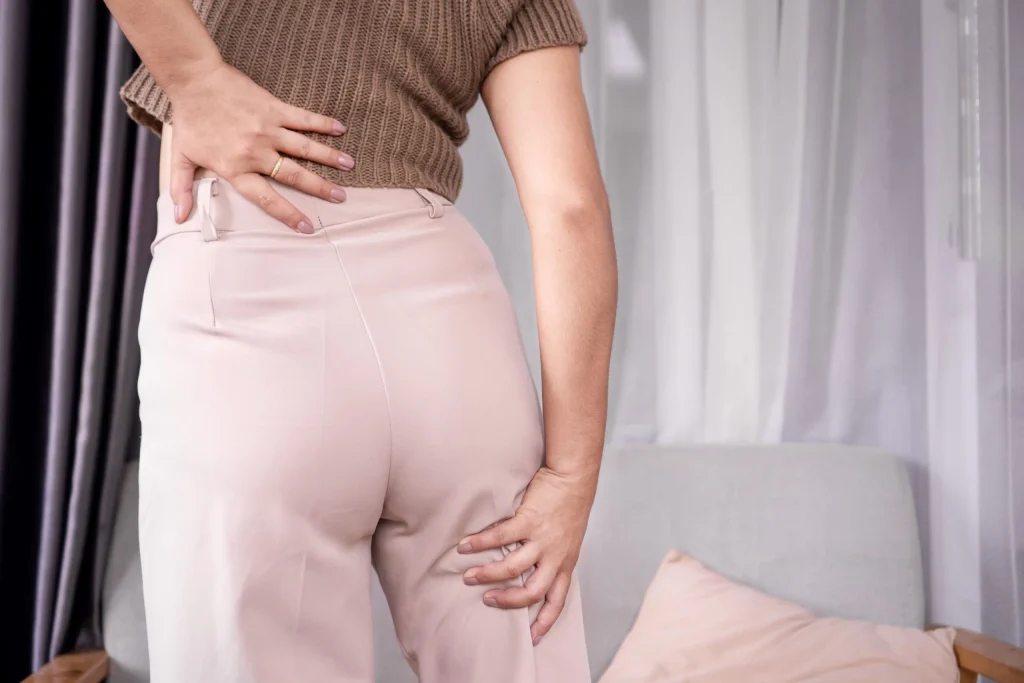
Relief usually comes from a two-part approach:
Reduce irritation (calm sensitive tissues)
Improve tolerance (restore strength, mobility, and mechanics so standing stops triggering pain)
Home Remedies and Self-Care Tips
The goal at home is to decrease load, improve alignment, and build endurance gradually.
1) Ergonomic Tips for Standing
Small changes can make a big difference:
Shift positions often: Avoid “statue standing.” Change foot position every few minutes.
Use a foot rest: Place one foot on a low step or cabinet base and alternate sides to reduce lumbar extension stress.
Soften the knees: Locked knees can tip the pelvis and strain the lower back.
Stack rib cage over pelvis: Think “tall through the crown of the head,” without flaring ribs.
Wear supportive footwear: Especially on hard floors.
Take micro-breaks: 30-60 seconds of walking, gentle bending, or hip movement every 20-30 minutes.
If your pain is worse at a workstation (kitchen, standing desk, retail counter), consider the surface height and whether you’re leaning forward or arching backward repeatedly.
2) Gentle Stretches and Exercises
Choose gentle movements that reduce stiffness without forcing pain. A few commonly tolerated options include:
Hip flexor stretch (gentle): Tight hip flexors can pull the pelvis forward and increase low back arching during standing.
Hamstring stretch (light): If hamstrings are very tight, pelvic motion can be limited.
Child’s pose or supported forward bend: Often eases extension-based standing pain.
Pelvic tilts: Helps you find a neutral pelvis position and reduce “over-arching.”
Tips:
Mild discomfort is okay; sharp pain is not.
Try shorter, more frequent sessions (1-3 minutes a few times/day).
If leg symptoms increase (tingling/numbness shooting down the leg), stop and seek guidance.
3) Strengthening Back Muscles
Standing pain often improves when the right muscles can support you longer:
Glute strengthening: Bridges or sit-to-stand drills can help reduce low-back “takeover.”
Core endurance: Dead bug variations, gentle planks, or bracing drills (as tolerated).
Hip stability: Side-lying leg raises or banded walks.
A key point is that the issue isn’t always “weak back muscles” – often it’s poor load-sharing between glutes, core, hips, and spine.
Alternative Treatments
When home care isn’t enough, conservative therapies may help decrease pain, improve mobility, and support healing.
1) Chiropractic Care
Chiropractic care may help when joint restriction, spinal mechanics, and muscle tension are contributing to pain. Care typically focuses on improving motion and reducing stiffness to make standing more comfortable.
2) Acupuncture
Acupuncture is commonly used to help manage pain and muscle tension. Some people find it especially helpful when pain is persistent, stress-related muscle guarding is present, or symptoms fluctuate.
3) Regenerative Medicine
Regenerative medicine is sometimes considered for certain musculoskeletal conditions when conservative approaches haven’t provided enough relief. It’s typically discussed after a full evaluation and in the context of your symptoms, goals, and overall plan.
Medical Treatment Options
If pain persists, repeatedly flares, or includes neurological symptoms, a more structured treatment plan can help you regain function and confidence.
1) Physical Therapy
Physical therapy can be especially valuable for standing-related back pain because it targets:
Posture and body mechanics training
Hip mobility and thoracic mobility (to reduce lumbar compensation)
Core and glute endurance (to improve standing tolerance)
A progressive plan to return to work, sport, and daily activities
2) Pain Management
Pain management focuses on reducing pain that interferes with daily life, often alongside rehab strategies to restore movement and strength. The right plan depends on your symptoms and how long they’ve been present.
3) Spinal Decompression
Spinal decompression is a popular treatment option at Advanced Wellness and is often discussed for conditions in which reducing pressure on spinal structures may be helpful. Whether it’s appropriate depends on the cause of your standing pain and your exam findings.